Brilliance
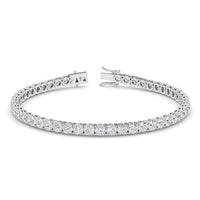
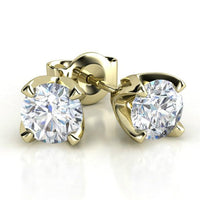
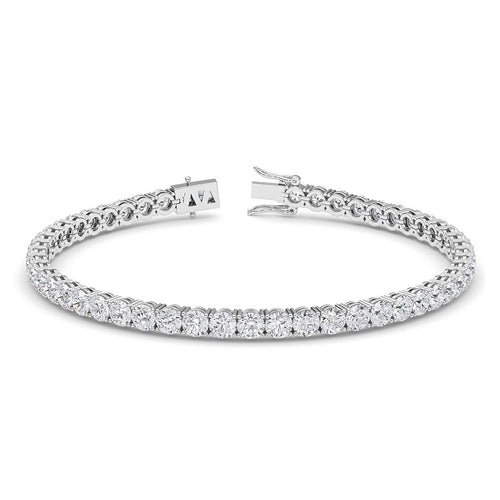
The bright white light that returns to your eye when light enters the stone, refracts off the internal facets and is reflected back. Brilliance is the diamond’s living glow — what makes it impossible to look away from.
At Monroe Yorke we don’t just sell diamonds — we cut them for beauty. Every stone we offer is chosen for the way it performs in the light: for its Brilliance, its Fire, its Scintillation, and its Symmetry. This is the science behind a diamond worth keeping for life.
For more than three decades, Monroe Yorke has refused to play the carat game. Most cutters preserve weight because diamonds sell by the carat — we sacrifice weight to chase precision. The result is a diamond that does what it should: pour light back into the room.
The 4Cs — Cut, Colour, Clarity and Carat — are an essential vocabulary, but they are not the whole story. The story is what happens when light enters the stone. We cut for that.
“A perfectly cut one-carat diamond will outshine a poorly cut two-carat every single time. Cut is not the most important of the 4Cs. It is everything.” — The Monroe Yorke Cutting PhilosophyDiscover the Four Properties →
Every Monroe Yorke diamond is graded against four optical properties. Together they describe how a stone behaves in the light — and they are the difference between a diamond you wear and a diamond you treasure.

The bright white light that returns to your eye when light enters the stone, refracts off the internal facets and is reflected back. Brilliance is the diamond’s living glow — what makes it impossible to look away from.

The dispersion of white light into its spectral colours — flashes of red, orange, yellow, blue and violet that ripple across the stone as it moves. Where brilliance is the white light returned, fire is the rainbow inside it.

The intricate pattern of bright and dark areas the diamond produces as it moves through the light. A well-cut stone scintillates with a thousand tiny flashes — the unmistakable signature of life.

The geometric precision of every facet relative to every other. Without symmetry, light cannot travel cleanly through the diamond. With it, the stone reads as inevitable — the way a great cathedral reads as inevitable.
The Monroe Yorke Signature Diamond is the result of more than thirty years of master cutting with our partners in Antwerp, Belgium. Where the industry tolerates compromise — a heavier stone with deeper pavilion angles, light leaking through the bottom — we don’t. Each Signature Diamond is hand-graded against our four-property standard, then cut to maximise every one.
The result is a diamond that returns more light to the eye than any conventional round brilliant we have measured. You can see the difference the moment a stone leaves the cutting bench.

Before any conversation about a diamond can be useful, you need a shared vocabulary. The 4Cs — Cut, Colour, Clarity and Carat — were established by the Gemological Institute of America to give that vocabulary a global standard.
Below, our master jewellers walk through each one — not as a textbook, but as the practical guidance we’d give a friend choosing a diamond for the first time.
Speak With a Specialist →Cut grade describes how well a diamond's facets interact with light. Even a flawless, perfectly colourless stone will look dead if it has been cut to preserve weight rather than to perform optically. The GIA grades cut from Excellent down to Poor.
At Monroe Yorke, we work almost exclusively in Excellent and our own Signature grade — and we will tell you, on the floor, if a stone you're considering is cut to weight rather than to beauty.
The GIA colour scale runs from D (completely colourless) to Z (light yellow or brown). The closer a diamond is to colourless, the rarer and more valuable it becomes — but the eye cannot tell colourless from near-colourless without comparison.
For platinum or white-gold settings, D–F shows as icy white. G–H is virtually identical to the eye and significantly better value. For yellow- or rose-gold settings, the warmer metal flatters I–J stones beautifully.
Diamonds form deep in the earth under extraordinary pressure, and almost every one carries tiny internal characteristics — called inclusions — that act like a fingerprint. Clarity grading describes the size, number, position and visibility of those characteristics.
The scale runs from FL (Flawless) through VVS, VS, SI to I. Most of the diamonds we recommend sit in VS1–SI1 — eye-clean to a trained eye, and the smartest place on the value curve for the majority of buyers.
A carat is a unit of weight — one carat equals 0.2 grams — not size. Two diamonds of identical carat weight can look noticeably different from above, depending on how they have been cut. A well-proportioned 1.0ct round brilliant typically measures around 6.5mm across the table; a poorly cut 1.0ct can look meaningfully smaller.
Our advice: choose carat last. Decide on the cut you trust, the colour and clarity that suit your setting, and then size up to the carat your budget and finger comfortably allow.
From the timeless round brilliant to the sculptural elegance of the emerald cut, every Monroe Yorke shape is held to the same four-property standard. Choose by mood, by setting, or simply by the one that catches you.
Verified Customer · Engagement Ring · Sydney, NSWAndrew at Monroe Yorke walked us through the four properties of light over a long coffee, drew the facet geometry on a napkin, and then showed us a diamond that did every single thing he'd said it would. There was no upsell, no theatre — just expertise. We've since recommended them to four friends.
Trust is earned by handing the verdict to someone else. Every Monroe Yorke diamond is sent to the world’s most rigorous independent grading authorities — never our own bench — before it ever reaches a setting.
The global standard. Founded 1931. Every Monroe Yorke diamond above 0.30ct is GIA-graded for cut, colour, clarity, carat and proportions, and ships with its original report.
Active member of the JAA — Australia’s peak ethics body for fine jewellers. Bound by the JAA Code of Conduct on disclosure, treatment of stones, and consumer protection.
Every rough we work originates from a Kimberley Process Certification Scheme participant — your assurance that the diamond on your finger has not financed conflict.
We cut for light performance, never weight. The result: a stone that visibly outshines its grading paper.
Independent grading is not an upgrade — it is the baseline. Every report ships with the diamond.
Founded 1992. Same Sydney workshop, same master jewellers, same standard — for over thirty years.
Every rough originates from a Kimberley Process participant. We know — and disclose — where each stone comes from.
Free claw-tightening, polishing and ultrasonic cleaning. For as long as you wear the ring, we look after it.
Every order, every postcode in Australia, fully insured door to door. No surprises at checkout, ever.
A soft toothbrush, warm water and a drop of mild dish soap. Gently scrub under the stone — that is where film collects and where light is lost. We also offer free ultrasonic cleaning at the workshop, any time you visit.
Gym, gardening, swimming, body lotion, perfume. Diamond is hard, but the metal that holds it is not — and chlorine is a known enemy of platinum. Off, then back on.
A complimentary annual check at our Sydney workshop tightens claws, polishes the band and certifies the setting. Five minutes of care, decades of peace of mind.
Book a private consultation at our Sydney workshop, or speak with a diamond specialist by phone. No pressure, no script — just an honest conversation about the right diamond for you.