


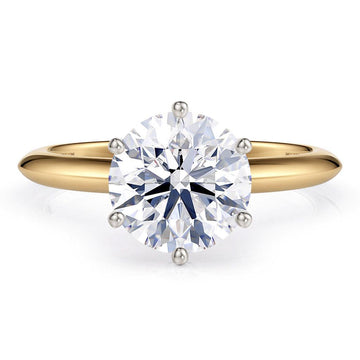
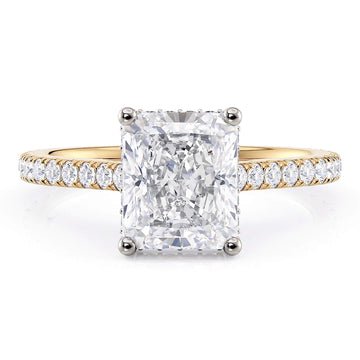
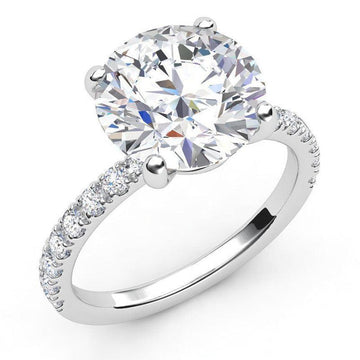
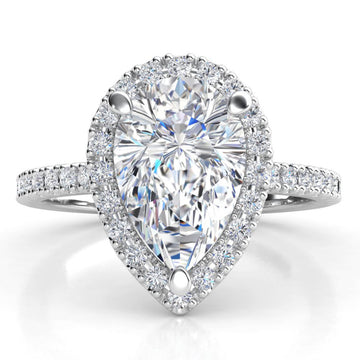


Rose gold engagement rings,made in Australia.
Rose gold engagement rings in 18ct, hand-finished in our Australian workshop. GIA-certified natural or IGI-certified lab-grown centre diamonds, sourced and graded by our founder Sean Amara. The pink hue comes from copper. The warmth suits every skin tone. The colour deepens beautifully with wear.


Design your perfect ring.
Collaborate with our master jeweller to create a bespoke rose gold engagement ring, made only for the person you are proposing to. Free consultation, no obligation. Six to eight weeks in our Australian workshop.
Amy & Jack · Perth · 2026We flew from Perth to see the ring in person and left knowing we'd got something no one else would have. Sean answered every question I didn't know I had.
Every ring, hand-finished by our master jeweller.
Ten stages over four to eight weeks. Design, 3D model, cast, source stones, clean, polish, set, eight hours of final finish, quality check, rectify. No shortcuts.
Cut for perfect light return.
A well-cut diamond throws light back at you across a room. A poorly cut one absorbs it and sits quiet on the finger. That difference is the single biggest thing you'll notice, and it's what we grade every stone against before it goes into a ring.
Cut.Excellent (natural) or Ideal (lab), no exceptions. This is what makes a diamond return light rather than absorb it.
Symmetry and polish.Both graded Excellent. It's why hearts and arrows show up cleanly under a scope.
Fluorescence.None or faint, never medium or strong. Keeps the diamond bright in every light.
Colour.D–G for naturals, D–E for labs. Cool white in yellow gold and platinum, without paying for a D flawless.
The rose gold ring, in depth.
A gemmologist's field guide. Eleven sections. Fifteen minutes to read. Written by Sean Amara, founder, trained at GIA and HRD Antwerp.
01Why rose gold matters now
Rose gold has been climbing steadily as an engagement ring choice since around 2013, and thirteen years in, it's still climbing. This isn't a fad. Fads don't last thirteen years.
Three forces drive rose gold's sustained appeal. First, it looks different from what most people's parents wore. Rose gold engagement rings are still uncommon enough to feel distinctive, but no longer so rare that they read as a design gamble. Second, it flatters more skin tones than any other engagement ring metal (see Section 06). Third, it photographs beautifully. Soft warm light against pink metal is the visual language of modern engagement photography.
If you're drawn to rose gold, you're not chasing a trend. You're choosing the metal that has quietly become the default alternative to yellow gold and white gold for a generation of buyers who want their ring to feel personal.
02What 18ct rose gold actually is
Every rose gold ring we make is 18ct. That means 75% pure gold, 20% copper, and 5% silver (or thereabouts, exact ratios vary slightly by workshop).
The copper is what makes rose gold pink. Pure gold is yellow. Add copper, a naturally red metal, and the resulting alloy shifts warm and pink. More copper produces a deeper, redder rose gold. Less copper (and more silver in the balance) produces a lighter, more subtly pink alloy. Both are legitimate variations of "rose gold". Our workshop leans toward the classic warm rose colour, enough copper to read as genuinely pink, balanced enough to still look like fine jewellery rather than costume.
The 750 hallmark stamped inside every ring is the international marker for 18ct gold, regardless of what colour the alloy is. Yellow gold, white gold, and rose gold at 18ct all carry the 750 stamp. The number refers to the pure gold content (750 parts per thousand), not the colour.
We don't make 9ct rose gold engagement rings. 9ct rose gold contains only 37.5% pure gold and a much higher copper content, which produces a redder colour but at the cost of durability, colour stability, and long-term wear. 18ct is the standard for a piece meant to last a lifetime.
03The patina truth, rose gold deepens with wear
This is the section every other jeweller ranking for this keyword skips.
Rose gold's copper content oxidises very slowly with skin contact and daily wear. Over five to ten years, the colour deepens subtly. The pink becomes marginally richer, marginally warmer. Most rose gold engagement rings you see on a wearer's hand ten years after purchase look SLIGHTLY more saturated in colour than they did on the day of proposal.
This is not tarnish. It's not damage. It's not a defect. It's a natural characteristic of copper-alloyed metals, and most rose gold wearers come to love it. The ring quietly becomes more distinctly ROSE gold over time.
If the deepening ever bothers you (it rarely does), a professional polish at any of our showrooms returns the metal to its original tone. Once. In 20 years, most owners have never asked us to do it.
Every other page ranking for "rose gold engagement rings australia" tells you rose gold "doesn't tarnish" or "won't go green". Both statements are partly true. Rose gold doesn't go green (that's low-karat gold with much higher copper content). But rose gold DOES deepen. We say so because it's true and because most people love it once they know to expect it.
04Rose gold vs yellow gold, how to choose
The decision most rose gold buyers cross-shop.
Skin tone. Rose gold flatters almost every skin tone (see Section 06 for why). Yellow gold flatters warm and olive tones best, less confidently on cool undertones.
Aesthetic personality. Yellow gold reads classic, historically correct, timeless. Rose gold reads modern, romantic, distinctive. Neither is objectively better. They say different things about the person wearing them.
Longevity of colour. Yellow gold is stable for life. The colour you buy is the colour you own in forty years. Rose gold deepens subtly over decades (see Section 03).
Price. Identical. 18ct yellow, white, and rose gold all cost the same per gram because they all contain 75% pure gold.
If you cannot decide: a two-tone ring with a rose gold band and white or yellow gold accents is one of our most popular custom builds. See Section 09.
05Rose gold vs white gold and platinum
The other common cross-shop.
Rose gold vs white gold. Rose gold is warm and distinctive; white gold is cool, classical, and neutral. Rose gold suits almost every skin tone; white gold sometimes reads slightly grey on very warm complexions. White gold requires rhodium re-plating every 2-5 years to maintain its bright white finish; rose gold requires no plating maintenance ever.
Rose gold vs platinum. Platinum is denser (heavier feel in the hand) and slightly more expensive per gram. Platinum's colour is stable for life; rose gold deepens subtly (Section 03). Platinum requires no rhodium plating; rose gold requires no plating. Platinum is genuinely hypoallergenic; rose gold with copper content can occasionally cause reactions in very sensitive skin (rare, but worth knowing).
Two-tone options. Any combination is possible in our workshop. Rose gold band with a white gold or platinum head is a modern classic. Rose gold and yellow gold two-tone is coming back into fashion. Ask us at your consultation.
06Skin tone and rose gold, why it flatters everyone
Rose gold is often described as "the most universally flattering metal for engagement rings." That's not marketing. There's a real reason.
Skin tones sit on a spectrum from cool (blue undertones) to warm (yellow/olive undertones). Yellow gold looks best against warm skin because the yellow tone matches the skin's undertone. White gold and platinum look best against cool skin for the same matching-effect reason.
Rose gold sits in the middle. The copper content adds a subtle pink warmth that flatters warm skin (matching the undertone) AND cool skin (adding a warm counterpoint that softens the coolness). Very few skin tones look worse in rose gold than in another metal. Some, particularly warm neutrals, look their absolute best in it.
If you're buying without the recipient's input, rose gold is the statistically safest choice. Try it in person at any of our showrooms if you want to be sure. Ten minutes and you'll know.
07Best diamond shapes for rose gold
Every shape works in rose gold. Some sing.
Oval and elongated cushion are the two shapes rose gold suits most beautifully. The soft rounded silhouettes of both stones complement the warm romantic character of the metal. If you love rose gold and you're not sure which shape, either of these is a safe first choice.
Round brilliant in rose gold is the timeless classic. Modern-looking, still romantic, never dates.
Cushion cut (any variant, crushed ice or chunky facet) reads distinctly vintage-inspired in rose gold. Historically correct pairing.
Pear and marquise work beautifully in rose gold. The elongated shapes plus warm metal read Art Nouveau, a coherent aesthetic.
Princess cut works but requires thought. The sharp geometric corners can feel dissonant against rose gold's soft warmth without a considered setting choice (halo or bezel usually resolves this).
Emerald and asscher (step cuts) in rose gold read Art Deco. Distinctive but requires the right buyer.
08Best gemstone pairings for rose gold
Rose gold is a strong metal setting for coloured stones. If you're considering a coloured centre or accents:
Morganite is the classic rose gold pairing. The soft peach-pink of morganite matches the metal's warmth perfectly. Popular with buyers who want a soft, romantic, distinctly modern engagement ring at a lower price point than a diamond of equivalent size.
Pink sapphire in rose gold is one of the most beautiful combinations in fine jewellery. The stone and the metal share the same colour family; the ring reads as a single considered composition rather than a stone-in-a-setting.
Champagne diamond, a warm honey-toned diamond, reads intentional in rose gold. Deep, warm, unusual.
Rubies and red spinels in rose gold create rich warm colour continuity. Beautiful for anniversary rings.
Aquamarine, the pale blue balances rose gold's warmth beautifully. Unusual pairing but striking when done well.
Emerald works but tends toward historical or vintage territory. Considered choice.
Stones that pair less confidently with rose gold: tanzanite (cool violet against warm metal can feel discordant) and untreated icy diamonds in D-F colour (the cool white of a very high colour grade can look mismatched against warm pink metal, G-J colour actually works better in rose gold).
09Two-tone construction, rose gold band, white claws
One of our most-requested custom builds. Worth understanding what it is and why buyers choose it.
A two-tone rose gold engagement ring pairs a rose gold band with white gold or platinum prongs holding the centre stone. The result: the warmth of rose gold on the finger, the whiteness of a cool metal at the point where the stone is held.
Why buyers choose this: (1) the white metal at the head lets the centre diamond appear whiter than pure rose gold would (rose gold slightly warms the diamond's apparent colour); (2) white gold and platinum are slightly harder than rose gold at the same karat, so the prongs holding the diamond are marginally stronger; (3) the visual contrast between warm band and cool head is genuinely beautiful.
Two-tone requires custom design or careful selection from our two-tone-specific collection. Any ring in this collection can be adapted to two-tone in our Australian workshop. Add two to four weeks to the delivery timeline.
Yellow gold band with rose gold accents is a related classic that's coming back into fashion. Cartier's "Trinity" ring (see Section 10) is the historical reference.
10A short history of rose gold
Rose gold's history is longer than most buyers realise.
The alloy has been made for centuries. Copper-gold combinations appear in ancient Egyptian and Roman jewellery. But rose gold as a distinct luxury category dates to the late 1800s. Fabergé, the Imperial Russian jeweller, used rose gold extensively in the eggs and jewellery he created for the Romanov family. The Russian court's preference for pink-toned gold established rose gold as a distinctly aristocratic material. For a time it was even called "Russian gold".
The style spread internationally in the 1920s. Cartier's iconic "Trinity" ring (1924), three interlocking bands in yellow, white, and rose gold, established the modern three-colour palette that jewellers still work with today. Art Deco design of the 1920s and 1930s used rose gold prominently.
Rose gold declined in mainstream popularity from the 1950s to the early 2000s (yellow gold and white gold dominated), then returned strongly from around 2013 as a millennial-driven revival. It's now permanent in every serious jeweller's catalogue. If you're drawn to it, you're not chasing a moment. You're choosing a metal with genuine historical depth.
11Care and longevity, why rose gold is easier than you think
Rose gold is one of the easier engagement ring metals to care for.
No rhodium plating required. Unlike white gold, rose gold's colour comes from its underlying alloy composition, not from a plated surface. The colour you buy is (roughly) the colour you own for life. It cannot chip off, wear away, or require re-plating.
Harder than you'd expect. A small metallurgical fact: 18ct rose gold is marginally HARDER than 18ct yellow gold at the same karat, because copper (rose gold's main alloying metal) is harder than silver (yellow gold's main alloying metal). Your rose gold ring will develop fine surface scratches with daily wear just like any 18ct piece, but the base metal is slightly more resistant to deformation than yellow gold. Not enough to matter for most wear scenarios, but worth knowing.
Cleaning at home: warm water, drop of mild dish soap, soft toothbrush, pat dry. Twice a month. Weekly if you use hand cream daily.
Professional maintenance: polish at any of our showrooms every 12-18 months. If you love the natural patina (Section 03) and want the deepened colour preserved, tell us at inspection. We'll polish gently rather than removing the patina layer entirely.
All maintenance on rings purchased from us is included in our lifetime warranty at no cost.
Your questions, answered.
Sixteen of the questions we hear most often across the showrooms.
What is rose gold and how does it get its pink colour?
Rose gold is an alloy of pure gold and copper (with a small amount of silver). The copper is what makes it pink. Pure gold is yellow; add copper, which is naturally red, and the resulting metal shifts warm and pink. 18ct rose gold contains 75% pure gold, 20% copper, and 5% silver. The 750 hallmark stamped inside the ring confirms the 18ct pure gold content.
Is 18ct rose gold better than 14ct or 9ct?
For an engagement ring, yes. 18ct contains 75% pure gold and holds its colour stably for life with fine polish maintenance. 9ct rose gold contains only 37.5% pure gold and much more copper. It produces a redder colour but can develop stronger tarnishing and colour drift over years. We don't make 9ct rose gold engagement rings for this reason. 18ct is the right answer for a piece meant to last a lifetime.
Does rose gold tarnish or fade over time?
Rose gold doesn't tarnish in the same way silver does, and it doesn't turn green like low-karat gold. What it does do, honestly, is DEEPEN in colour over years of wear. The copper content oxidises very slowly with skin contact and the pink hue becomes marginally richer. Most owners love this natural patina. If you don't, a professional polish returns the ring to its original tone. See our in-depth Section 03 for the full picture.
What does the 750 hallmark mean on a rose gold ring?
750 is the international marker for 18ct gold, 750 parts per thousand pure gold. It applies to yellow, white, and rose gold alike; the number refers to the pure gold content, not the colour. Every rose gold ring we make carries the 750 hallmark inside the band.
Does rose gold suit all skin tones?
Almost. Rose gold's copper content adds warmth that flatters warm skin tones AND softens cool skin tones. Very few complexions look worse in rose gold than in another metal, which is why it's often called the most universally flattering engagement ring metal. If you're buying without the recipient's input and don't know their skin tone, rose gold is the statistically safest choice.
Rose gold vs yellow gold, which is better?
Neither is objectively better. Yellow gold reads classic, historically correct, and stable in colour for life. Rose gold reads modern, romantic, and deepens subtly with wear. Yellow gold flatters warm and olive skin best; rose gold flatters almost all skin tones. Both are 18ct, both cost the same per gram. Choose based on aesthetic personality, not price.
Rose gold vs white gold, which suits my style?
Rose gold is warm, romantic, distinctive. White gold is cool, classical, neutral. Rose gold requires no maintenance plating; white gold requires rhodium re-plating every 2-5 years to stay bright white. Rose gold flatters almost all skin tones; white gold sometimes reads slightly grey on very warm complexions. Modern buyers choose rose gold for personality; traditional buyers choose white gold for classical elegance. Both are valid.
Which diamond shapes look best in rose gold?
Oval and elongated cushion are the two shapes rose gold suits most beautifully. Soft rounded silhouettes plus warm metal creates a coherent romantic aesthetic. Round brilliant in rose gold is the timeless classic. Cushion cut in rose gold reads distinctly vintage-inspired. Pear and marquise take on Art Nouveau character. Princess cut works but requires a halo or bezel setting to soften the sharp geometry against the warm metal.
Can I set a coloured gemstone in rose gold?
Yes, and rose gold is one of the strongest metal choices for coloured stones. Morganite is the classic pairing (peach-pink stone matching pink metal). Pink sapphire in rose gold creates single-colour-family harmony. Champagne diamond looks intentional in rose gold. Ruby, pink spinel, and aquamarine all pair beautifully. Emerald works but reads distinctly vintage. Tanzanite and very high-colour diamonds (D-F) pair less confidently.
Does rose gold require rhodium plating like white gold?
No. Rose gold's colour comes from its underlying copper-gold alloy, not from a plated surface. The colour is baked into the metal, not applied over the top. Rose gold never needs re-plating. This makes it lower-maintenance than white gold over decades of ownership.
Is rose gold harder or softer than yellow gold?
Marginally harder at the same karat. 18ct rose gold uses copper as its main alloying metal, while 18ct yellow gold uses silver. Copper is harder than silver, so the base metal in rose gold is slightly more resistant to deformation than yellow gold. Not a difference most owners will notice in wear, but worth knowing if you're comparing durability.
When did rose gold become popular for engagement rings?
Rose gold has been made since ancient times but rose to distinct luxury status in late-1800s Imperial Russia. Fabergé used it extensively for the Romanov court, which is why it was historically called "Russian gold." Cartier's 1924 "Trinity" ring established the modern three-metal palette (yellow with white and rose). The current mainstream revival started around 2013 and has continued for over a decade. This is a permanent option in every serious jeweller's catalogue now, not a fad.
Can I have a two-tone rose gold engagement ring?
Yes, one of our most popular custom builds. A two-tone rose gold engagement ring pairs a rose gold band with white gold or platinum prongs holding the centre stone. The warmth of rose gold on the finger, the whiteness of a cool metal at the setting point (which also lets the diamond appear whiter). Any ring in this collection can be adapted to two-tone. Add two to four weeks to delivery.
Are lab-grown rose gold engagement rings cheaper than natural?
Yes, typically 40-50% less at the same size and quality. Lab-grown diamonds are chemically, optically, and physically identical to natural diamonds. The rose gold metal itself costs the same regardless of the centre stone. The price difference comes entirely from the diamond. Every design in this collection can be made with either a GIA-certified natural or an IGI-certified lab-grown centre.
How do I care for a rose gold engagement ring?
Easier than most metals. No rhodium re-plating required (unlike white gold). Home cleaning: warm water, drop of mild dish soap, soft toothbrush, pat dry, twice a month. Weekly if you use hand cream daily. Professional polish at any of our four showrooms every 12-18 months, included in our lifetime warranty. If you love the natural patina that develops with wear (Section 03), tell us at inspection. We'll polish gently to preserve the deepened colour.
Can I see rose gold engagement rings in person at your Sydney, Melbourne, Brisbane or Perth showroom?
Yes. We recommend it. Rose gold reads differently in person than in photos (screens flatten the copper warmth). Book a private appointment at any of our four showrooms. Bring the recipient if you can, or a photo and their ring size. Allow forty-five minutes.
See rose gold in person.
Rose gold reads differently in person than in photos, screens flatten the copper warmth. If you're within travel distance of one of our four showrooms, come in and see three or four rose gold rings on the recipient's hand in natural light before you commit. Private appointments, no walk-in pressure, one master jeweller and one host per booking.
Every centre stone, certified.
Every engagement ring centre diamond that leaves our Australian workshop carries an independent certificate. Pavé and melee accent stones are hand-selected to match, but are not individually certified.


