


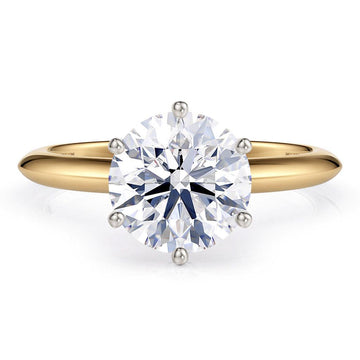
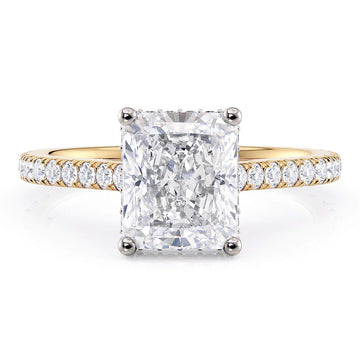
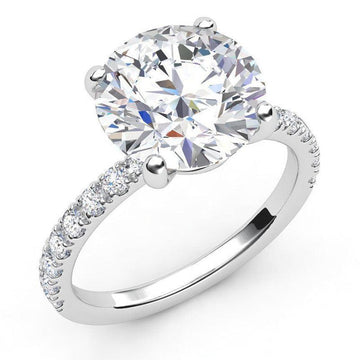
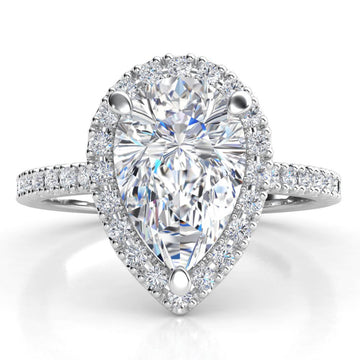


- 1 Step 1 Choose Your Setting
- 2 Step 2 Select Your Diamond
- 3 Step 3 Review & Order
Loose Diamonds · Australia
Diamond search.
Search Australia's largest live inventory of certified loose diamonds, hundreds of thousands of natural and lab-grown stones, every one graded by GIA or IGI. Filter by shape, carat, colour, clarity and budget, and we'll pair the stone you choose with one of our Monroe Yorke settings or a bespoke ring from our workshop. Every diamond we sell is filtered for cut quality and BGM clarity, and comes with a lifetime warranty and full insurance valuation.
| Shape | Carat | Colour | Clarity | Cut | Polish | Sym. | Report | Price (AUD) |
|---|
No diamonds found
Try adjusting your filters, broaden the carat range, add more colour grades, or change the shape.
Something went wrong
We couldn't load diamonds right now. Please try again in a moment.
Diamonds selected
Compare 2–4 side by side, or share up to 12 as a shortlist
A Gemmologist is always within reach.
Choosing a loose diamond is a decision most people make once in a lifetime, and even a well-written certificate leaves questions a buyer can't answer alone. Every message, call and WhatsApp we receive is read and answered by a qualified Gemmologist, not a chatbot, not a sales floor. Ask about a certificate, compare two stones side by side, or get a second opinion before you commit. We'll be plain-spoken and we won't upsell.
Any question, any time.
Not ready to search yet? Looking at a certificate from somewhere else and want a second opinion? Trying to understand what BGM means, or whether lab-grown is right for you? Send us a note. A qualified Gemmologist will reply within a couple of hours in plain English, no scripts, no upselling, no obligation.
Find your shape.
Each diamond shape tells its own story. Round brilliants return the most fire; ovals and pears make a modest carat look larger; emeralds and asschers reward exceptional clarity. Tap any shape below to pre-filter the search above.
Find your carat.
A diamond's carat weight is the single biggest factor in price. Here's roughly where most Australian buyers land, but every size has its own character. Tap a range to pre-filter the search above.
The Monroe Yorke diamond standard.
Of the 2 million certified diamonds trading globally at any one moment, only a fraction pass our filter. Here is what we remove, and why it matters to the stone you'll wear for a lifetime.
Cut quality only
We list only Ideal and Excellent cut grades. A diamond's cut determines how it returns light, and no colour or clarity upgrade will rescue a poorly cut stone. This single filter removes 60% of what's on the market.
BGM filtered out
BGM, Brown or Green body-colour overtones and Milky haze, are the three things a GIA certificate won't flag but will quietly dull a diamond's beauty. Our search filters these out at source so nothing on this page carries them.
Eye-clean only
SI and VS stones vary wildly. Our filter restricts the search to stones graded eye-clean, no inclusion visible to the naked eye, so you never need to second-guess the certificate.
Paired to a setting
Choose your stone here and one of our jewellers will pair it with the right Monroe Yorke setting, claw spread, head size and finger profile matched for the finished ring, not just the certificate.
Understanding the 4Cs.
Cut, Colour, Clarity and Carat are the four properties that determine a diamond's price and its beauty. They don't carry equal weight, and knowing which to spend on, and which to save on, is the single most useful thing any buyer can learn.
Cut, spend here
Cut is the only one of the 4Cs that is entirely the work of human hands, and it is the single biggest driver of how a diamond looks. A well-cut stone one grade lower in colour or clarity will out-sparkle a poorly cut stone two grades higher. We only list Ideal and Excellent cut grades for round brilliants, and the equivalent for fancy shapes. Below that threshold you lose brilliance, fire and scintillation, the three things most people actually mean when they say a diamond is "beautiful".
Colour, save here
Colour is graded D (colourless) to Z (light yellow). D, E and F are "colourless"; G, H, I and J are "near-colourless" and look identical to the untrained eye once set in a ring. The jump in price from G to D can be 40% for a difference almost no one, including us, can see without laboratory conditions. For white gold or platinum we recommend G–H. For yellow gold the warmer tones of I–J save thousands and look stunning.
Clarity, be careful
Clarity grades the inclusions inside the stone. Flawless (FL) and Internally Flawless (IF) stones command enormous premiums for inclusions you'll never see. VVS1–VVS2 are indistinguishable from flawless to the eye. VS1–VS2 are our sweet spot, clean to the eye at every angle. SI1 is risky and SI2 very risky; some are beautiful, many have inclusions visible from certain angles. This is where our eye-clean screening matters most.
Carat, the obvious one
Carat is weight, not size. A 1-carat round brilliant is roughly 6.5mm across the top. Prices step up sharply at the "magic sizes" 0.50ct, 1.00ct, 1.50ct and 2.00ct, so a 0.95ct diamond is often 15–20% cheaper than a 1.00ct and visually identical. If size matters most, consider an oval or pear in the same carat weight: both appear 10–15% larger than a round of the same weight.
Natural vs lab-grown diamonds.
Chemically, optically, physically, they are the same stone. The differences are in origin, price and resale behaviour. Here's how each stacks up for an Australian buyer in 2026.
| Natural diamond | Lab-grown diamond | |
|---|---|---|
| Chemical makeup | Pure crystalline carbon | Pure crystalline carbon |
| Hardness | 10 on the Mohs scale | 10 on the Mohs scale |
| Appearance to the eye | Beautiful; indistinguishable from lab-grown without specialist equipment | Beautiful; indistinguishable from natural without specialist equipment |
| Origin | Formed in the earth over 1–3 billion years and brought to the surface by volcanic activity | Grown in a laboratory in 4–6 weeks under conditions that mimic the earth |
| Certification | GIA, IGI, HRD and AGS | GIA and IGI (clearly labelled as laboratory-grown) |
| Rarity & provenance | Finite global supply, each stone a geological record of billions of years | Unlimited supply, grown to order |
| Chosen most often for | Engagement rings, heirloom pieces, and buyers who value the story and permanence of a mined stone | Larger looks on a flexible budget, fashion jewellery, and buyers who prioritise size and brightness over origin |
We stock both because both are beautiful, and the right choice is personal. Our jewellers will walk you through either path with no agenda, many of our clients view a natural and a lab-grown side-by-side in the showroom before deciding.
What's actually different between the two.
Chemically, both are pure carbon. But a natural diamond also carries trace impurities picked up during the billion years it spent forming in the earth's mantle, small amounts of nitrogen and hydrogen locked into the lattice, and in some stones microscopic crystals of other minerals trapped alongside the carbon: olivine, garnet, pyroxene, sometimes tiny pockets of ancient mantle fluid. Lab-grown diamonds are deliberately grown without those trace elements, which is how gemological laboratories can tell origin apart under spectroscopy and deep-UV imaging. Neither is "more real" than the other, they're the same stone, with different biographies.
Where to spend, where to save.
Two diamonds at the same budget can look very different in the hand. These are the trade-offs we walk every client through in the showroom, the places a small saving changes nothing visible, and the places where cutting a corner shows.
Spend on Cut
Cut is where light becomes beauty. Every dollar you move into a better cut grade pays you back visually, every day, in every lighting condition. This is the one C we never compromise.
Save on Colour
G and H colour look identical to D once set in a ring, but D commands a 30–40% premium. For yellow gold, I–J is beautiful and warm. Save here first.
Watch Clarity
VS1 and VS2 are our sweet spot, eye-clean, every time. SI stones vary wildly; the ones we list have each been inspected and passed. Flawless costs a premium most people can't see.
Shop Shape Smartly
Oval, pear and marquise shapes appear 10–15% larger than a round of the same carat weight. If size matters most, the shape you choose can be the biggest lever of all.
Frequently asked.
Where can I buy loose diamonds in Australia?
Monroe Yorke Diamonds offers one of Australia's largest live inventories of certified loose diamonds, hundreds of thousands of natural and lab-grown stones available for purchase. Every stone is GIA or IGI certified and our search filters remove anything that fails our cut-quality and BGM standards. Free insured delivery Australia-wide, lifetime warranty, and a full insurance valuation included.
Is a GIA or IGI diamond better?
GIA (Gemological Institute of America) is the most stringent grading laboratory in the world and is the gold standard for natural diamonds. IGI (International Gemological Institute) grades both natural and lab-grown diamonds and is the recognised standard for lab-grown. Both are reputable; GIA grading reports typically command a small price premium on natural stones. We stock certificates from both.
Is a lab-grown diamond a real diamond?
Yes. A lab-grown diamond is chemically, physically and optically identical to a mined diamond, both are pure crystalline carbon and both rate 10 on the Mohs scale. The difference is in how each is formed: a natural diamond is a billion-year geological record brought up from the earth, while a lab-grown is created in weeks under conditions that mimic the earth. We stock both because they appeal to different clients for different reasons, and we're happy to show you each side-by-side.
How much should I spend on a diamond?
The "three months' salary" rule is a 1930s marketing slogan with no basis in anything real. The right amount is whatever lets you buy a well-cut, eye-clean stone in the size and style you want, without financial stress. Our jewellers will show you what your budget actually buys at your preferred shape, carat and cut quality, in both natural and lab-grown, and let you decide which direction feels right.
What is BGM in diamonds?
BGM stands for Brown, Green and Milky, three defects a standard GIA or IGI certificate will not warn you about. Brown and Green are faint body-colour overtones that sit outside the D-Z colour scale, so a stone certified as a clean G or H can still have a brownish or greenish tint that makes it look dull. Milky describes a hazy, cloudy or oily appearance, usually caused by sub-microscopic inclusions or, in rarer cases, by very strong blue fluorescence. None of these show up on paper, only in person, under proper lighting. Every stone we list has been inspected by hand and rejected if it shows BGM.
What does "eye-clean" mean?
An eye-clean diamond has no inclusions visible to the naked eye from any angle at a normal viewing distance (around 25cm). Clarity grades of VS1 and above are almost always eye-clean. VS2 is usually eye-clean. SI1 and SI2 vary dramatically. Our search filters restrict the results to stones graded eye-clean so you don't need to second-guess the certificate.
What's the best shape of diamond?
Round brilliant is the most popular (around 60% of all engagement rings) because its 57-facet cut returns more light than any other shape. Ovals and pears look 10–15% larger than a round of the same carat weight. Emeralds and asschers reward high clarity grades and show cleanly cut facets. The best shape is the one that suits the wearer's hand and the setting style, we're happy to advise.
Do you offer layby on loose diamonds?
Yes. We offer 50% deposit layby on any diamond or ring, with the balance payable at collection. There are no fees, no interest, and the stone is reserved exclusively for you from the moment the deposit is received.
Can I return a loose diamond?
Loose diamonds purchased online carry a 30-day inspection period. If the stone isn't right, return it for a full refund, provided the GIA or IGI certificate laser inscription matches and the stone is in its original condition. Settings and finished rings follow a separate returns policy.
How do I know I'm getting a fair price?
Our prices refresh weekly against the Rapaport Diamond Report, the global wholesale benchmark used by every reputable retailer. You can compare any stone on our site against its certificate online, and we'll explain exactly what any price difference between two stones reflects. We also match any genuine quote from an accredited Australian retailer.
What comes with my diamond?
Every loose diamond ships with its original GIA or IGI grading report, a full insurance valuation certificate, a Monroe Yorke certificate of authenticity, and a signed Monroe Yorke diamond box. Delivery is insured end-to-end and requires signature on receipt.


