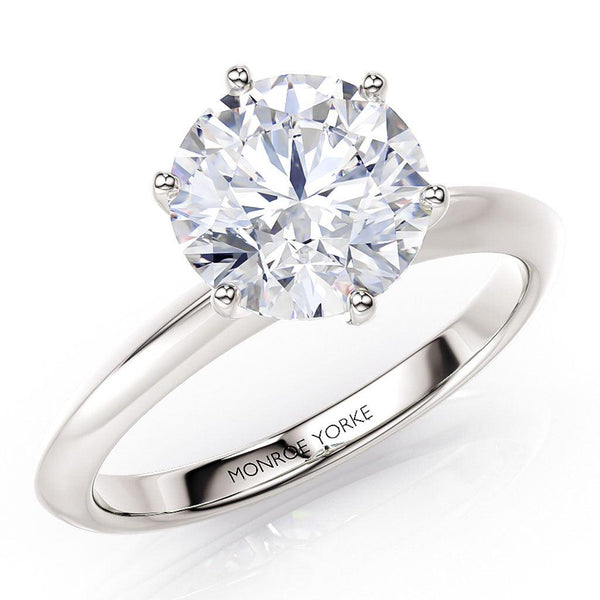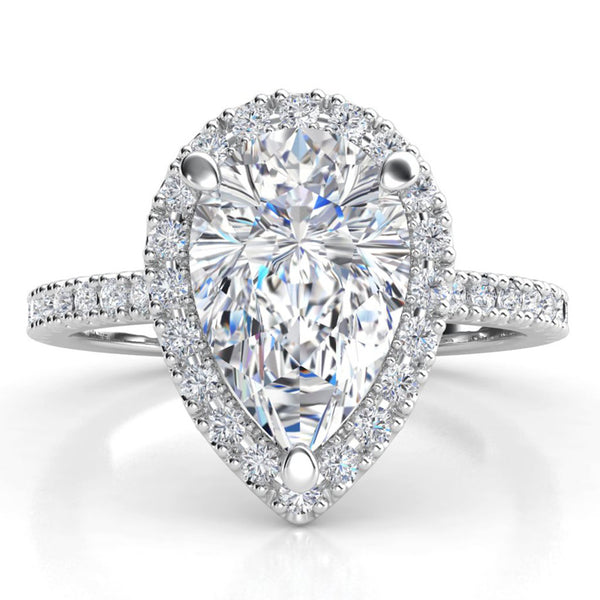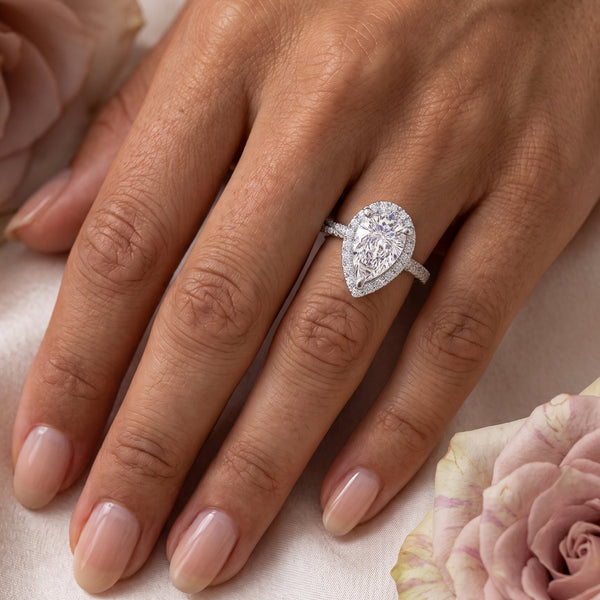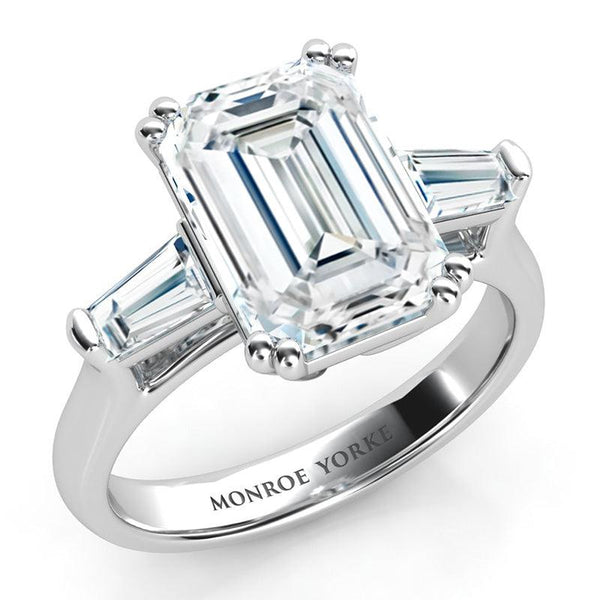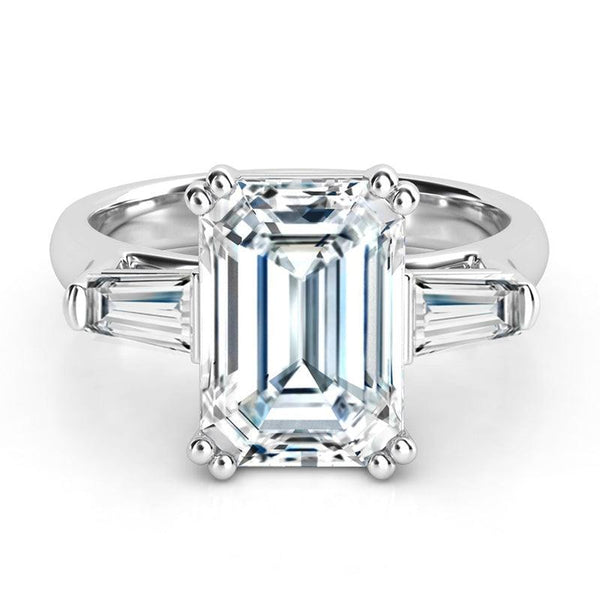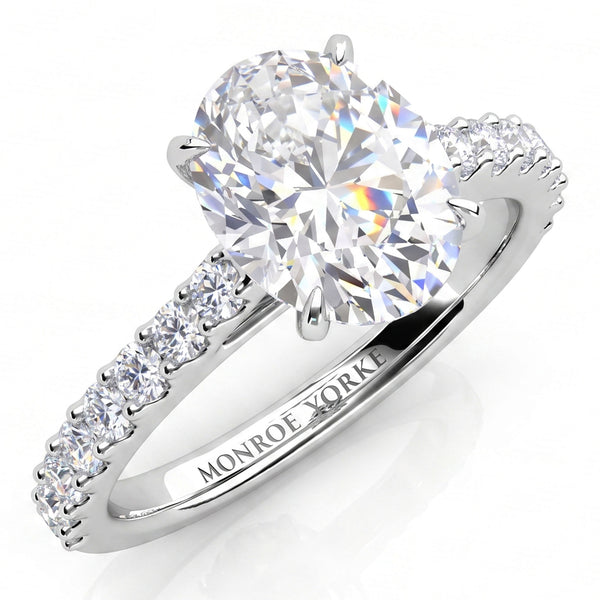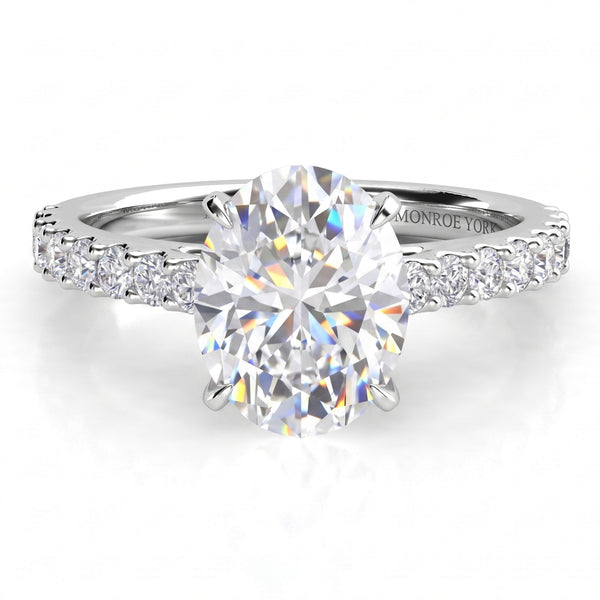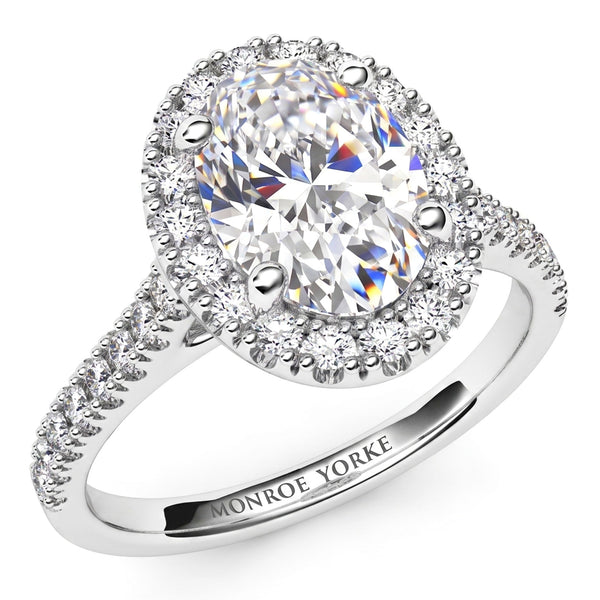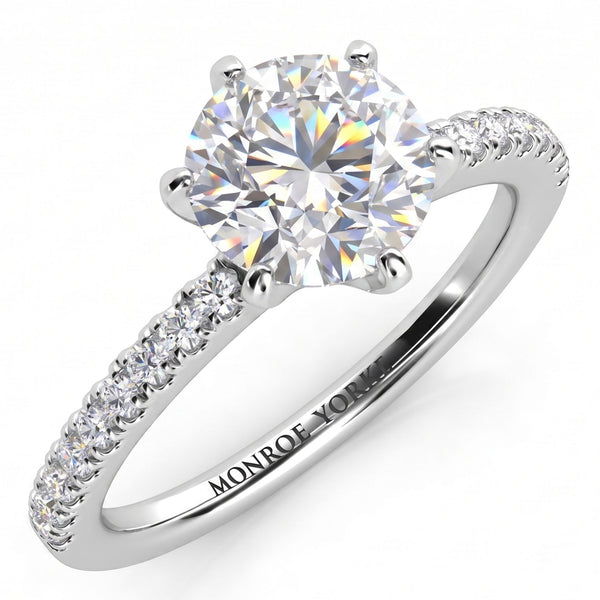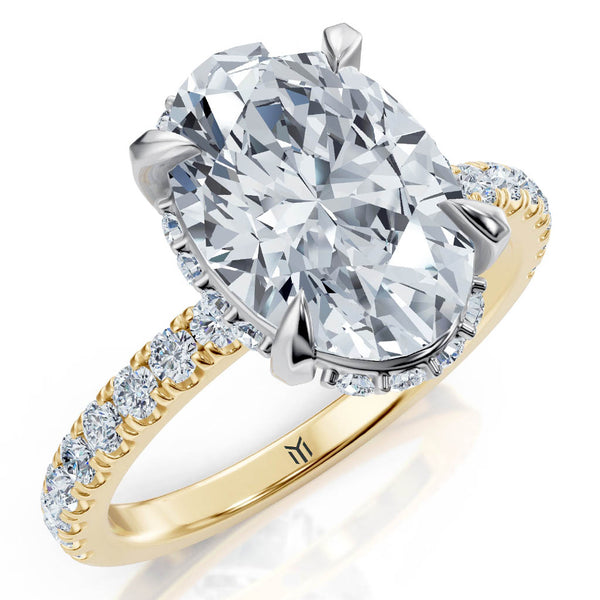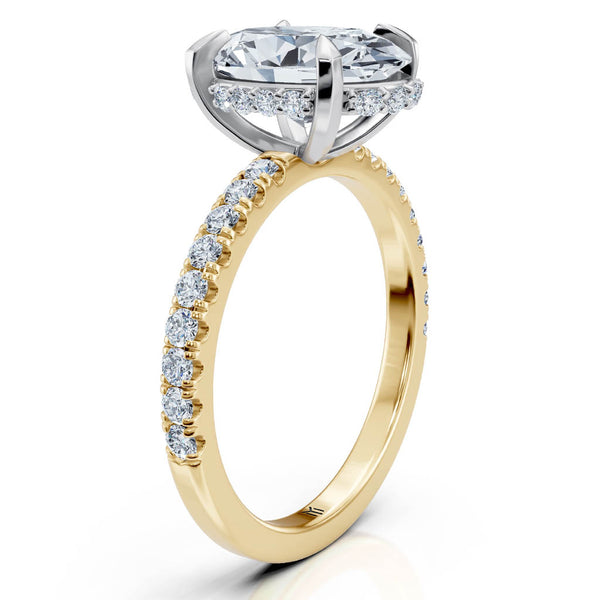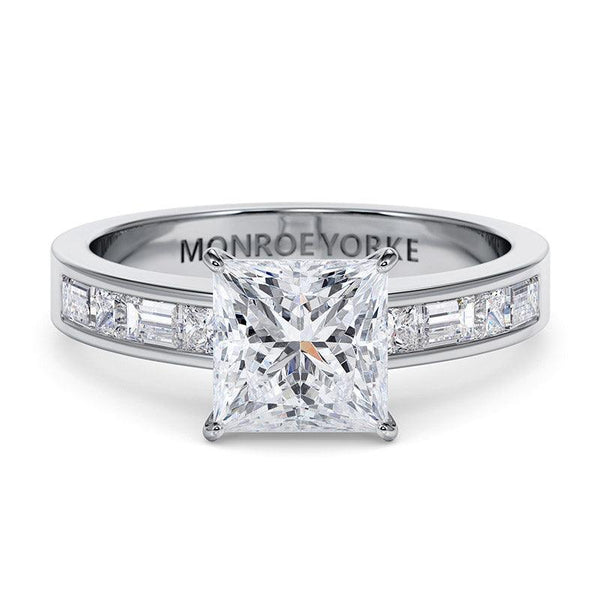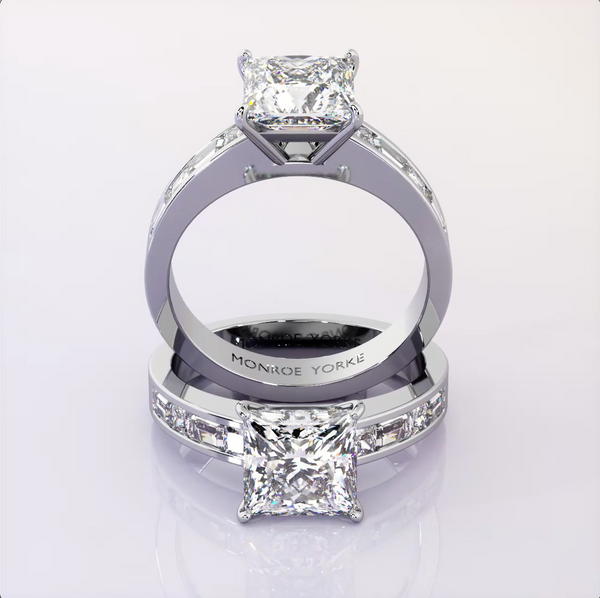
Australia's most
requested size, done properly.
Six settings, natural or lab grown, independently certified and hand-finished in our Sydney workshop. Real prices, ready to hand-finish today.
Three starting points
Where most of our customers begin. A classic, a modern, and a design-lover.
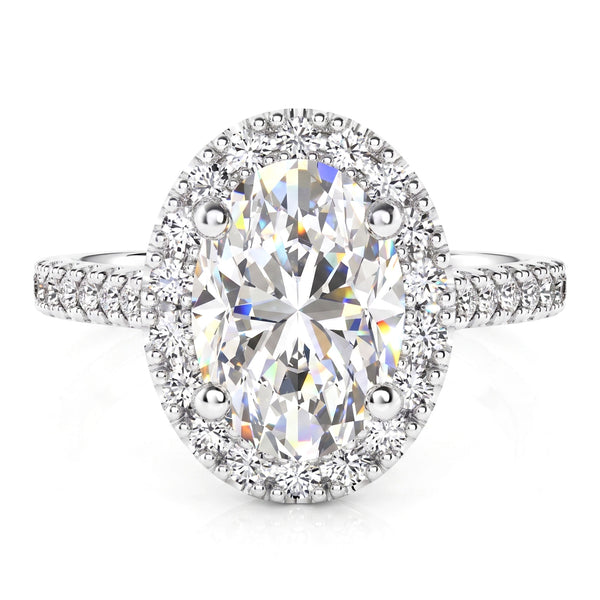
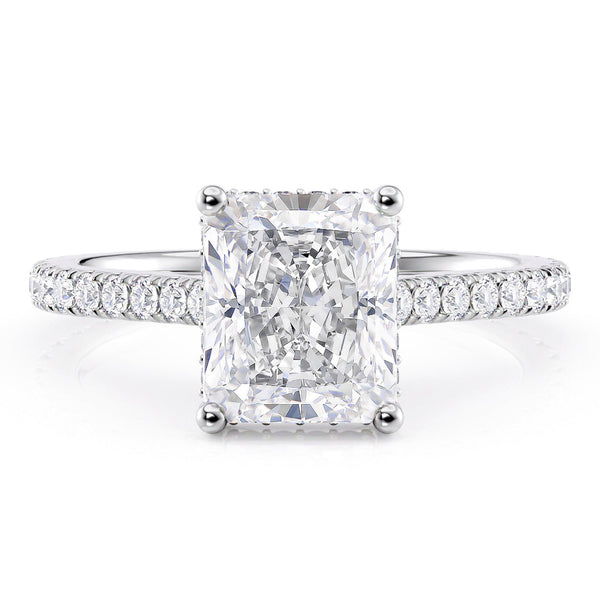
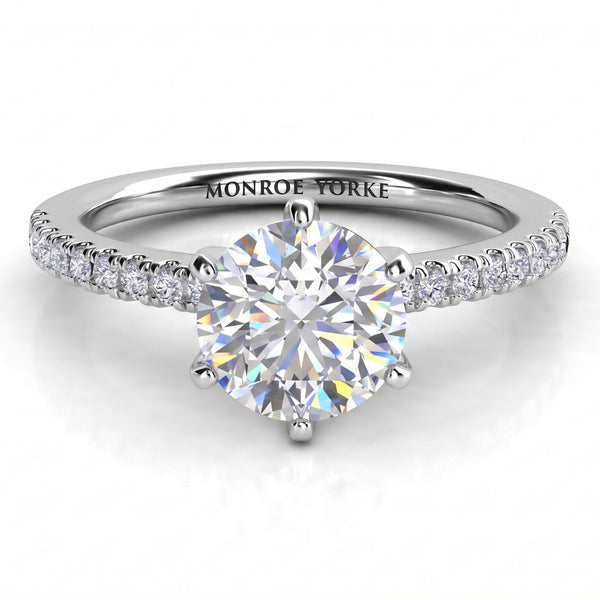
Every 1 carat ring, in one place
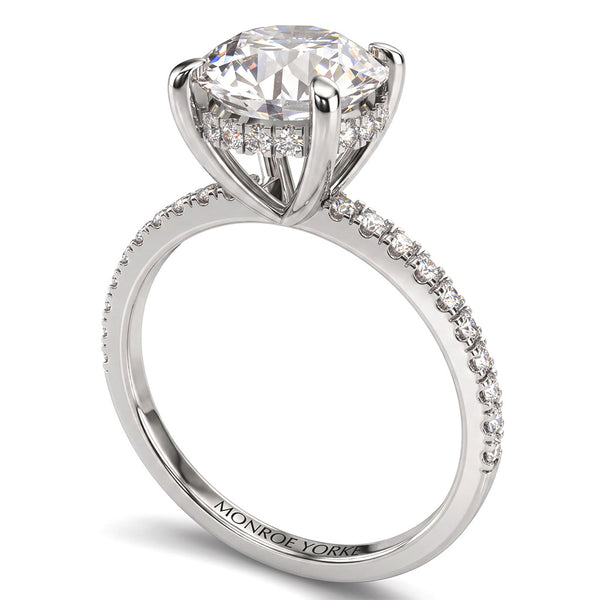
Each design is available in your choice of centre diamond, natural or lab grown, in four metals. Prices show the starting point for a 1 carat centre stone.
Every question I had was answered before I asked it. The stone I picked in the showroom is the stone I got in the box, right down to the certificate number. Everything felt considered.Emma R. · Sydney · The Love, 1.02ct lab grown
What does a 1 carat diamond ring cost?
A 1 carat diamond ring at Monroe Yorke starts at $2,592 with a lab grown diamond, or $5,969 with a natural diamond. Both prices are for a complete ring, hand-finished in Australia, with an independently certified centre stone.
| Ring | Centre diamond | Setting | Complete ring |
|---|---|---|---|
| Lab grown, 1ct, D colour, VVS2, ideal cut, IGI | $993 | $1,599 | $2,592 |
| Natural, 1ct, G colour, VS2, excellent cut, GIA | $4,370 | $1,599 | $5,969 |
| Natural, 1ct, D colour, VVS2, excellent cut, GIA | $6,257 | $1,599 | $7,856 |
Two paths to the same ring. The setting, the workshop, and the hand-finishing are identical in every row. What changes is the centre stone, and both are beautiful choices for different reasons.
Natural is the rarer stone, formed over billions of years and prized for its provenance. Most of our natural diamond buyers choose G colour, VS2 clarity, because it reads white and clean to the eye at a price that leaves room for a larger stone or a more elaborate setting.
Lab grown is chemically and optically identical to natural, grown in weeks rather than eons. Because the stones are more accessible we set every lab grown ring in D colour, VVS2 clarity, the top of both scales.
Why is so much of a lab grown ring the setting?
On a 1 carat lab grown ring at $2,592, most of what you pay is for the ring itself, not the stone. That places the craftsmanship of the setting at the centre of the decision.
With a lab grown centre stone, most of what you pay for is the metal, the setting work, and the hours at the bench. The craftsmanship of the ring itself carries the weight.
With a natural centre stone the balance sits differently. You are paying for a rare stone that took billions of years to form, set into the same hand-finished ring. Both are considered choices for different reasons.
Every ring we sell is hand-finished in Australia. At this price point that is not a detail, it is most of what you are buying.
How prices scale as you move up in carat weight
Diamond pricing does not scale linearly with size. A 2 carat stone costs considerably more than a 1 carat, because larger rough is significantly rarer. This holds for both natural and lab grown, more sharply for natural.
| Carat | Natural stone (GIA) | Lab grown stone (IGI) |
|---|---|---|
| 1 carat | $6,257 (D VVS2) | $993 (D VVS2) |
| 2 carats | $26,468 (F VS2) | $1,764 (F VS2) |
Larger natural stones are prized precisely because they are hard to find. A 2 carat natural is an heirloom-scale stone with rarity to match. If size matters more than provenance to you, lab grown lets you go bigger without changing budget.
Both are the right answer for different customers. The prices above are for the stone alone, in the Love six-claw setting, prices as at August 2026.
How big is a 1 carat diamond?
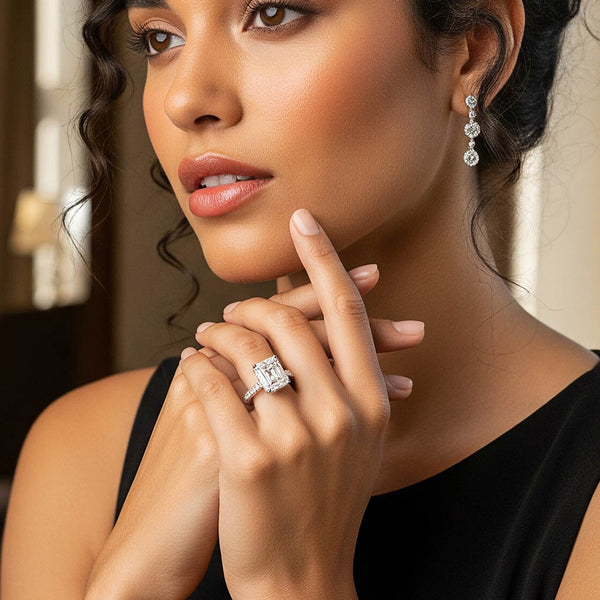
A 1 carat round brilliant measures about 6.5mm across. Carat is a measure of weight, not width, so two 1 carat diamonds in different shapes will look like different sizes on the hand.
| Shape | Approximate face-up size at 1 carat |
|---|---|
| Round brilliant | 6.5 mm |
| Princess | 5.5 mm |
| Cushion | 5.5 mm |
| Asscher | 5.5 mm |
| Emerald | 7.0 × 5.0 mm |
| Radiant | 6.0 × 5.0 mm |
| Oval | 7.7 × 5.7 mm |
| Pear | 8.5 × 5.5 mm |
| Marquise | 10.0 × 5.0 mm |
Elongated shapes look larger for the same weight because more of the stone sits face-up. A 1 carat oval reads noticeably wider on the finger than a 1 carat round, and a marquise wider still.
For a full size comparison across every carat weight, see our diamond size guide.
What do colour and clarity actually mean?
Colour runs from D, completely colourless, down to Z, noticeably tinted. Clarity runs from Flawless down to Included. Our lab grown diamonds are D colour, VVS2 clarity, the top of both scales.
Colour
| Grade | What it means | Visible to the eye? |
|---|---|---|
| D, E, F | Colourless | No tint at all |
| G, H, I, J | Near colourless | Looks white face-up |
| K, L, M | Faint colour | Warmth visible in daylight |
| N to Z | Noticeable colour | Clearly tinted |
Clarity
| Grade | What it means | Visible to the eye? |
|---|---|---|
| FL, IF | Flawless, internally flawless | No |
| VVS1, VVS2 | Very very slightly included | No |
| VS1, VS2 | Very slightly included | No |
| SI1, SI2 | Slightly included | Sometimes |
| I1 to I3 | Included | Yes |
We use D colour, VVS2 clarity for every lab grown diamond we sell. When the stone is the affordable part of the ring, there is no reason to compromise on it.
For natural diamonds, G colour and VS2 clarity is where most of our customers land. Both grades look white and clean to the naked eye, and the money saved goes further into carat weight or into the ring itself. We stock D VVS2 natural stones for buyers who want the certificate to read at the very top.
Which shape works best at 1 carat?
Oval and marquise look largest at 1 carat because their elongated outline puts more of the stone face-up. Round brilliant returns the most light. Emerald cut shows inclusions most readily, so it rewards a higher clarity grade.
The round brilliant is the classic. It has 57 or 58 facets designed to return light back to the eye, and at 1 carat it reads as a clean, balanced stone on almost any hand. Most engagement diamonds sold in Australia are round for this reason.
The oval is the most-requested elongated shape. At 1 carat it measures roughly 7.7mm by 5.7mm, which sits wider on the finger than the 6.5mm round. If face-up size matters to you and you don't want to move up in carat weight, oval is usually the answer.
Step cuts, the emerald and asscher, are a distinct look. They show the diamond's clarity rather than hiding it, which means inclusions are more visible and a VS2 or better grade tends to be worth it. A well-cut emerald is calm and architectural where a round is fiery. Also worth a look, the cushion, princess and pear.
Or shop our pre-built lab grown rings
Ready to hand-finish and ship. Choose a design, pick your size, we take it from there.
See 1 carat rings in person
Our showrooms across Australia are by appointment, so you have a jeweller to yourself. Bring the natural stones and the lab grown side by side and see the difference in real light.
Common questions
Start with the ring, or with the stone.
Every 1 carat design above is fully configurable. Or tell us the diamond you're after and we'll bring the setting to you.