


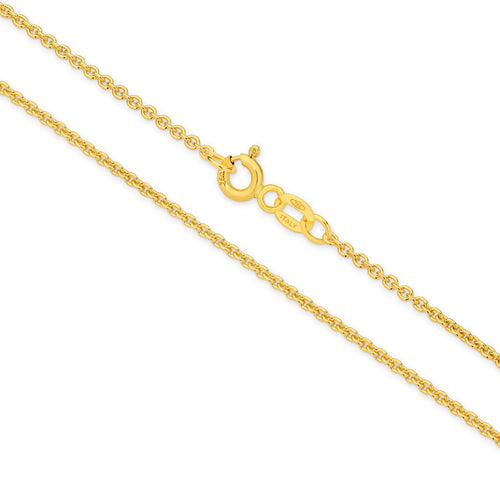


How to Buy a Solid Gold Chain in Australia: An Honest Buyer's Guide
A clear, expert guide from the Monroe Yorke Diamonds team.

A gold chain is the most-worn piece of fine jewellery in any collection, and one of the most poorly chosen. People will spend weeks researching an engagement ring and forty minutes choosing a chain they will wear every day for the next thirty years. The decisions matter more than the buying time suggests.
Three things go wrong most often when Australians buy gold chains. The first is paying for "gold" and finding out a year later that the gold was a microscopic layer over base metal. The second is choosing the wrong weight for the pendant they wanted to hang from it, leaving the chain to live in a drawer. The third is paying boutique prices for chains made by no one in particular, where neither the gold nor the craft is documented.
This is a guide to avoiding those three mistakes. We've been making and selling fine jewellery in Australia for twenty years, and the gold chain category is where the gap between marketing language and actual quality is widest in our industry. The framework below is the same one we use with clients in our showrooms.
What you're actually buying
The first decision is the most important. There are four common categories sold as "gold chain", and only one of them is gold all the way through.
Solid gold. Real gold throughout the chain. Stamped with the purity (9ct, 18ct, sometimes 22ct). The only category worth wearing daily for life. A solid gold chain doesn't tarnish, doesn't wear thin, and doesn't expose a base metal as the surface ages. The colour you see is the colour the chain is.
Gold-filled. A thin layer of solid gold mechanically bonded over a base metal core, typically with the gold layer making up 1/20 of total weight. Lasts five to ten years of normal wear before the gold layer wears through at the high-friction points (clasp, pendant rest point on the neck).
Gold vermeil. Sterling silver dipped in gold. The US standard requires a minimum gold thickness of 2.5 microns; Australia has no equivalent legal standard, so quality varies widely. Even at the US thickness, vermeil tarnishes through after a few years of wear.
Gold-plated. A microscopic layer of gold electroplated onto a base metal. Looks identical to solid gold on day one. Indistinguishable from costume jewellery by day 365.
Our chains are solid gold only. We don't sell plated or filled or vermeil, not because they are wrong choices for everyone, but because they are not the right choice for a chain you intend to wear for life. If a retailer doesn't clearly state which category they are selling you, that's the first signal to walk away.
9ct or 18ct gold
Once you've decided on solid gold, the next question is the purity.
9ct gold is 37.5% pure gold, alloyed with stronger metals (typically copper, silver and zinc) to harden it. It is the most affordable per gram and the most practical choice for chains worn daily. The harder alloy holds up better to friction, gym work, household activity, kids. The colour reads as warm yellow rather than the deep saturated tone of higher-purity gold.
18ct gold is 75% pure gold. It has the deeper, warmer colour that 9ct can't match, more weight on the neck for the same chain dimension, and it develops the soft patina that fine jewellery is meant to age into. The trade-off is that 18ct is softer than 9ct, so it shows wear marks more readily on high-contact surfaces.
For most clients we recommend 9ct for the everyday-fine chain worn under a shirt, and 18ct for the chain meant to be seen. If your budget allows one chain and only one, choose 18ct for the visible piece. If your budget allows the daily chain plus a special-occasion chain, 9ct for daily and 18ct for occasion is the classical pairing.
Where the chain is made matters more than people think
Most Australian retailers sell gold chains sourced from one of three places: Italy, Turkey, or Asia. The differences are not trivial.
Italy has been the world's centre for fine gold chain manufacturing for centuries. Italian goldsmiths perfected the techniques behind every classical chain you can name. The Belcher, the Curb, the Cable, the Box, the Figaro, the Rope. Each was refined in Italian workshops over generations, and the consistency of finish from a top Italian house is something no other origin matches. The same way Swiss makers set the global standard for mechanical watches, Italian goldsmiths set the global standard for gold chains.
Turkish chains are well-made and significantly cheaper, but the quality varies widely between makers. The good Turkish houses are very good. The middle of the market is fine. The bottom end has the same finishing inconsistencies as cheap Asian production.
Asian-sourced chains often arrive with link weights below the stated millimetre rating, clasps that fail within twelve months, and gold purity that doesn't quite match the stamp. The retail markup on these chains often makes them more expensive at the till than a comparable Italian chain bought directly.
"Made in Italy" on a gold chain matters the way "Swiss Movement" matters on a watch. It is a quality signal that has been earned over centuries. We pay the premium for it because the difference is visible to anyone who has compared the chains side by side.
What "Australian gold" means and why it's worth the question
This is where the conversation about chain origin becomes important, and where most retailers go quiet.
Most gold sold globally is not traceable. It moves through international refining systems that mix gold from many sources, and the chain you buy can contain gold from anywhere, refined by anyone, with no documentation of where it came from. The "9ct gold" stamp on the clasp tells you the purity, not the provenance.
Australian gold is different. Australia is one of the world's top three gold-producing nations, and the major Australian refining systems (Perth Mint, Royal Australian Mint) operate under documented chain-of-custody. Gold refined in Australia carries the same kind of provenance that an estate-bottled wine carries. You can trace it back to the source.
This matters for two reasons. The ethical reason is obvious. Documented gold cannot have been sourced from conflict zones or from artisanal mines using mercury. The practical reason is less talked about but just as important. Traceable gold tends to be refined to tighter purity tolerances, which means the 9ct or 18ct stamp on a chain made from documented Australian gold is more likely to actually be 9ct or 18ct rather than 8.4ct dressed up.
Monroe Yorke is one of the few Australian retailers telling this combined story: chains made in Italy by master goldsmiths, from 100% certified Australian gold. It's a specific position that wasn't built for marketing. It was built because we couldn't find a single international supplier whose chain origin and gold origin we both trusted, so we built the partnership ourselves.
Chain style and choosing what suits your life
The eight classical chain styles are not interchangeable. They sit differently on the neck, layer differently, hold pendants differently, and read differently when worn.
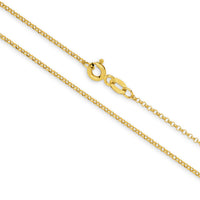
The Belcher is the classical round-link chain and the safest first solid gold chain choice. It holds a pendant beautifully and layers cleanly. The Curb is the traditional men's gold chain: interlocking flat links lying parallel to the skin, increasingly worn by women for its weight and clean line. The Cable is the simplest construction: light, everyday, the chain for fine pendants and the base layer of a chain stack. The Box uses modern square links and reads as the most contemporary of the classical chains, architectural rather than ornate. The Anchor takes the Cable form and adds a bar through the centre of each link, giving the chain its nautical name and a heavier, more sculptural read. The Figaro is the Italian classic: alternating long and short links in a 1+3 rhythm, worn solo as a statement chain. The Rope is built from twisted strands and is the most decorative of the classical chain forms, catching light like multiple chains at once. The Paper Clip uses elongated rectangular links and has become the contemporary chain of the last decade, worn by men and women equally.
If you're buying your first solid gold chain, a Belcher or Cable at an everyday weight is the safest starting point. If you want a statement chain to wear visibly, look at the Curb, Figaro or Paper Clip. If you're buying for a specific pendant, take the pendant with you, or send us a photo so we can match the chain weight to the pendant scale.
Five real budgets, five real chains
The most useful way to think about budget is to see what each range actually buys. Five examples from chains we currently make.
Under $1,000. A lightweight 9ct Cable or fine-gauge Belcher chain in Yellow, White or Rose gold. The everyday-fine chain worn under a shirt, or paired with a delicate pendant. Italian-made from Australian gold. A lifetime piece if treated well.
$1,500 to $3,000. A mid-weight 9ct Belcher, Curb or Box chain at a length that suits your wardrobe. The everyday-visible chain that pairs cleanly with most clothes and most occasions.
$3,000 to $6,000. An 18ct everyday chain in the same classical styles, or a heavier 9ct statement chain. The chain you'd buy as a milestone gift, or to replace the daily chain you've worn for a decade.
$6,000 to $12,000. A heavyweight 18ct Curb, Figaro, or Diamond Cut Anchor chain. This is the "chain you keep for life" budget. The piece bought to mark something significant and worn from then on.
$12,000 and above. Significant 18ct statement chains with custom lengths, custom clasps and custom weight specifications. The chain commissioned to mark a major milestone and intended to be passed down.
The honest close
The chain you'll wear every day for the next thirty years is not the most expensive option in the showcase. It's the one that fits how you actually dress, in the right weight for the right wardrobe, made from gold and by hands whose provenance you can trust.
Spend twenty minutes on the framework decisions, not on the budget. Solid gold, Italian-made, traceable origin, the right weight for what you'll pair it with. Once those four are right, the chain that suits your life is the right chain.
If you'd like to talk through weight, length, or pendant pairing with one of our master jewellers, book a 15-minute call. We'll send you a shortlist of three or four chains in your budget before any meeting, so you can react to actual pieces rather than abstract ideas. There is no obligation to proceed.
The jewellery your special moments deserve is not the most expensive jewellery in the showcase. It's the chain that will be worn every day for a lifetime.
Common questions about buying a gold chain in Australia
How much should I spend on a gold chain?
For an everyday solid gold chain in Australia, most buyers spend between $1,500 and $3,500. The full market ranges from around $800 for a fine-gauge daily chain to $15,000 or more for a heavyweight 18ct statement chain. Lab-grown alternatives don't apply to chains. There is no substitute for solid gold if you want a chain that lasts a lifetime.
Is 9ct or 18ct gold better for a chain?
Both are correct choices for different uses. 9ct gold (37.5% pure) is harder, more affordable per gram, and the practical choice for daily chains worn under clothing or in active environments. 18ct gold (75% pure) has the deeper colour, more weight on the neck, and the patina-ageing that fine jewellery develops. For one chain only, choose 18ct if it's visible, 9ct if it's a daily-fine under the shirt.
Where are the best gold chains made?
Italy has been the world's centre for fine gold chain manufacturing for centuries. The classical chain forms (Belcher, Curb, Cable, Box, Figaro, Rope) were perfected in Italian workshops over generations. Turkish and Asian production varies more widely in quality. The "Made in Italy" stamp on a gold chain is a meaningful quality signal in the same way "Swiss Movement" is on a watch.
How do I know if a gold chain is real?
A solid gold chain is stamped with its purity (9ct, 18ct, 750, 375, depending on standard) on the clasp or the last link. Plated and filled chains are sometimes stamped misleadingly, so the stamp alone isn't proof. Real gold doesn't tarnish, doesn't change colour under skin oils, and a magnet won't attract it. The only certain test is acid testing or X-ray fluorescence, both of which any reputable jeweller can perform.
What length gold chain should I buy?
Standard chain lengths in Australia: 40cm sits at the collarbone (choker length), 45cm sits just below (the classical women's everyday length), 50cm sits mid-chest (good for layering or a pendant display), 55cm to 60cm sits below the bust (men's standard, or for longer pendants). If you're buying for a pendant, add 2cm to 5cm to the length you'd otherwise pick so the pendant sits at the right point on the chest.
How do I care for a solid gold chain?
Solid gold is one of the lowest-maintenance metals you can own. Warm soapy water and a soft cloth weekly keeps it bright. Avoid wearing chains in chlorinated pools (chlorine attacks the alloy in 9ct gold over time) and remove before applying perfume or hair products. We offer free professional cleaning and inspection at any of our studios in Sydney, Melbourne, Brisbane and Perth.
Explore the collection. Gold Chains, Italian-made from Australian gold
Talk to a Monroe Yorke specialist. Book a 15-minute discovery call
Written & reviewed by the Monroe Yorke Diamonds team
We have spent 20 years helping Australians choose diamonds, with appointment-only studios in Sydney, Melbourne, Brisbane and Perth.
Frequently asked questions
Ready to find your ring?
Browse the collection, or book a private appointment and let our specialists guide you.
 Cost Guides
15 Jun 2026
How Much Should You Spend on an Engagement Ring in Australia?
The two-month salary rule was a 20th-century De Beers advertising campaign, not a tradition. Our founder breaks down what an...
 Buying Guide
03 Jun 2026
Diamond Quality Facts
Every diamond is unique. This is a beautiful fact about the most exquisite mineral in the world. They are not...


