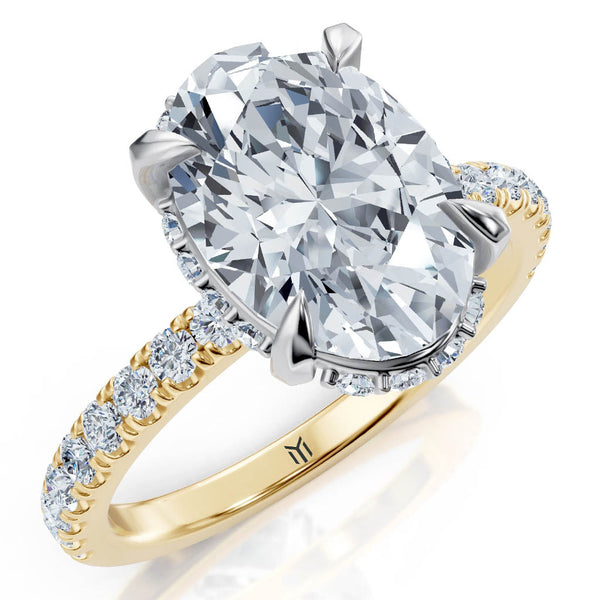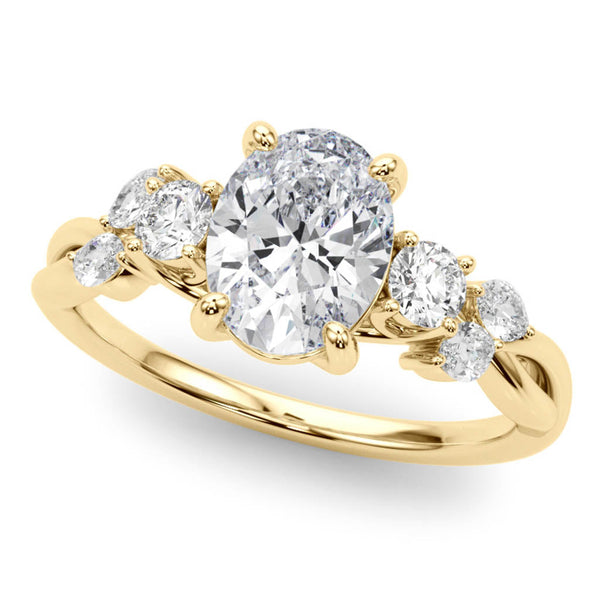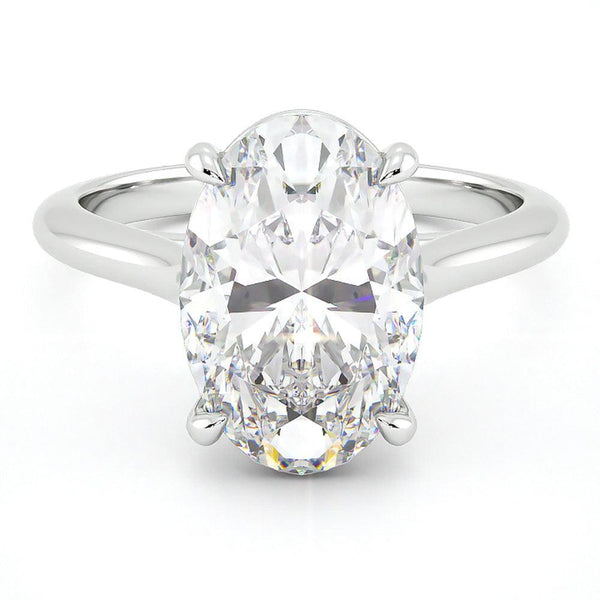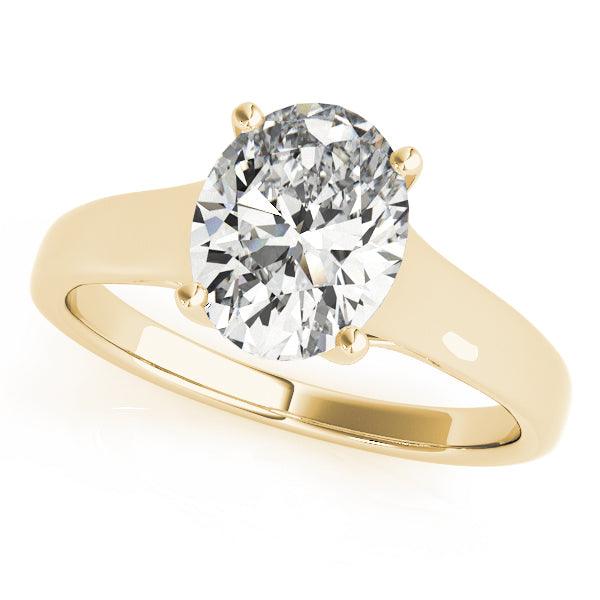



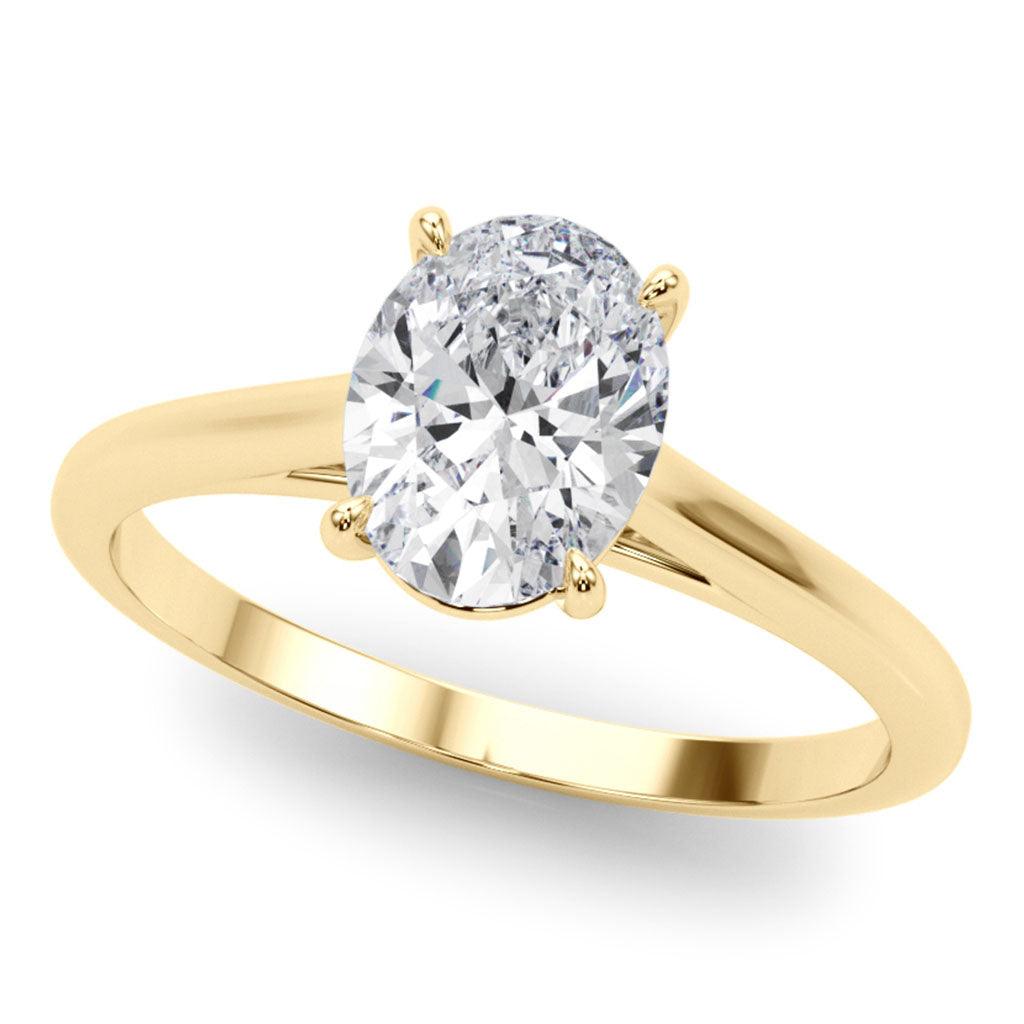
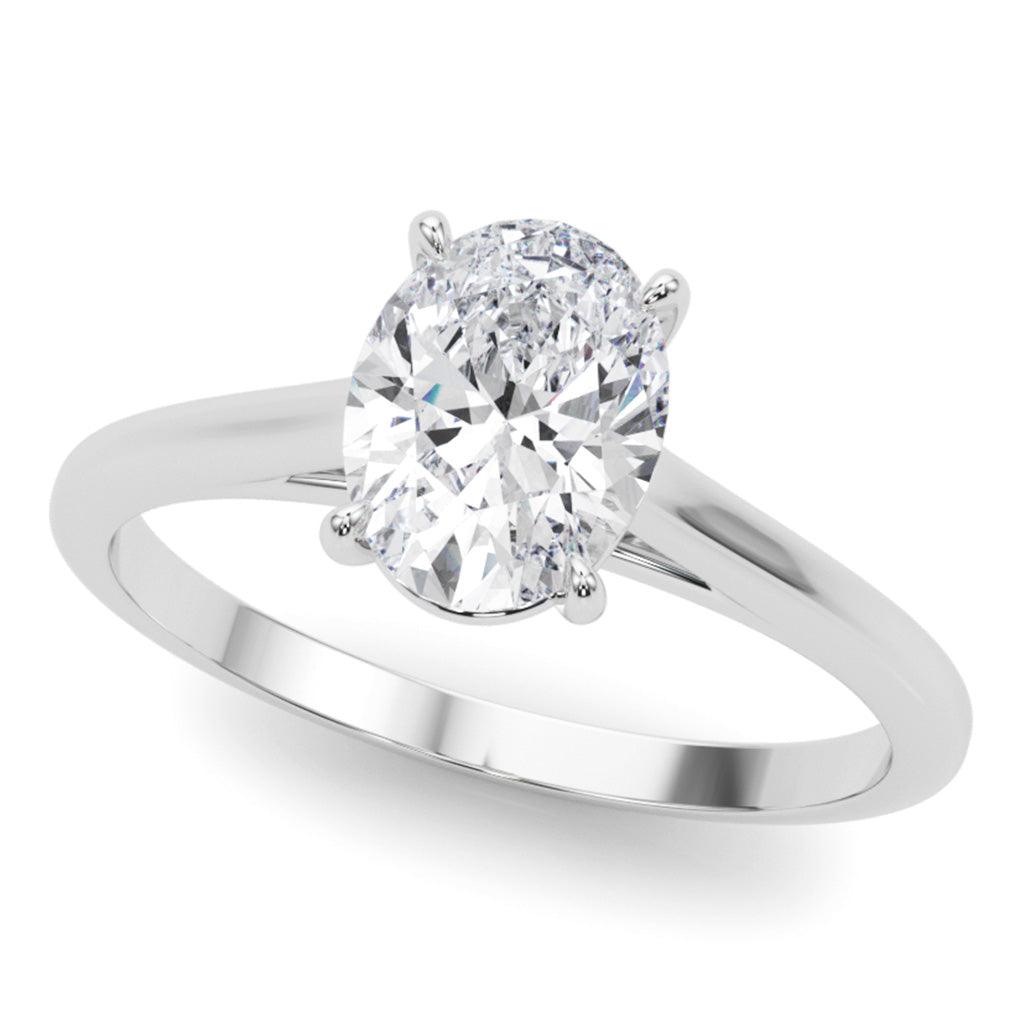

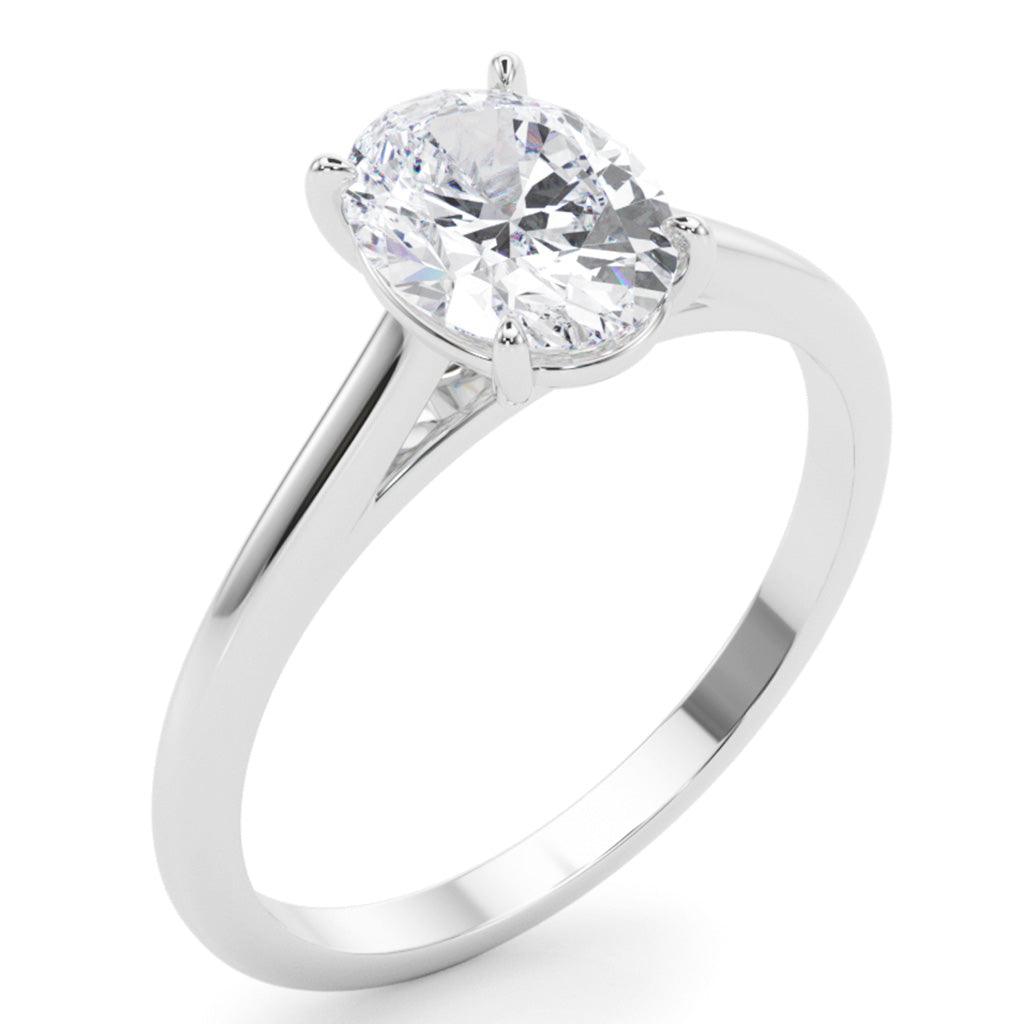
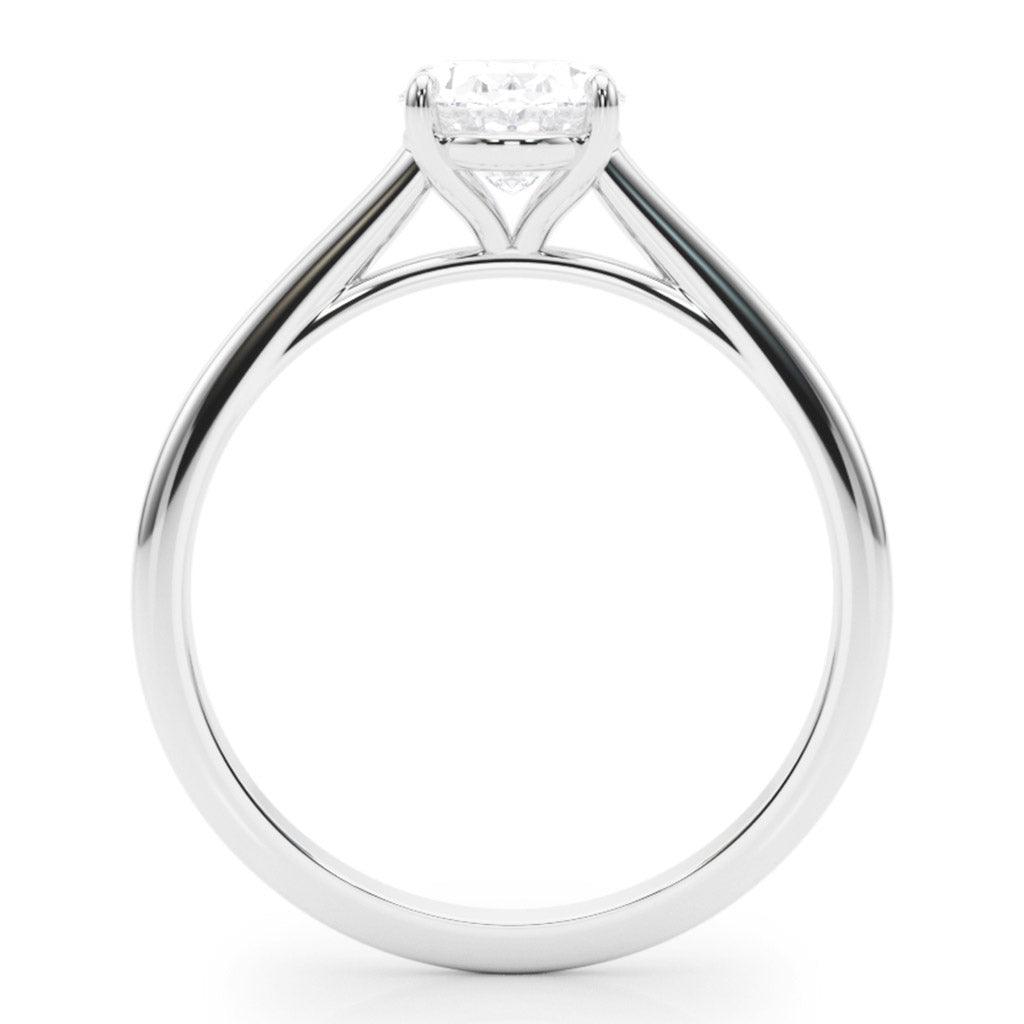
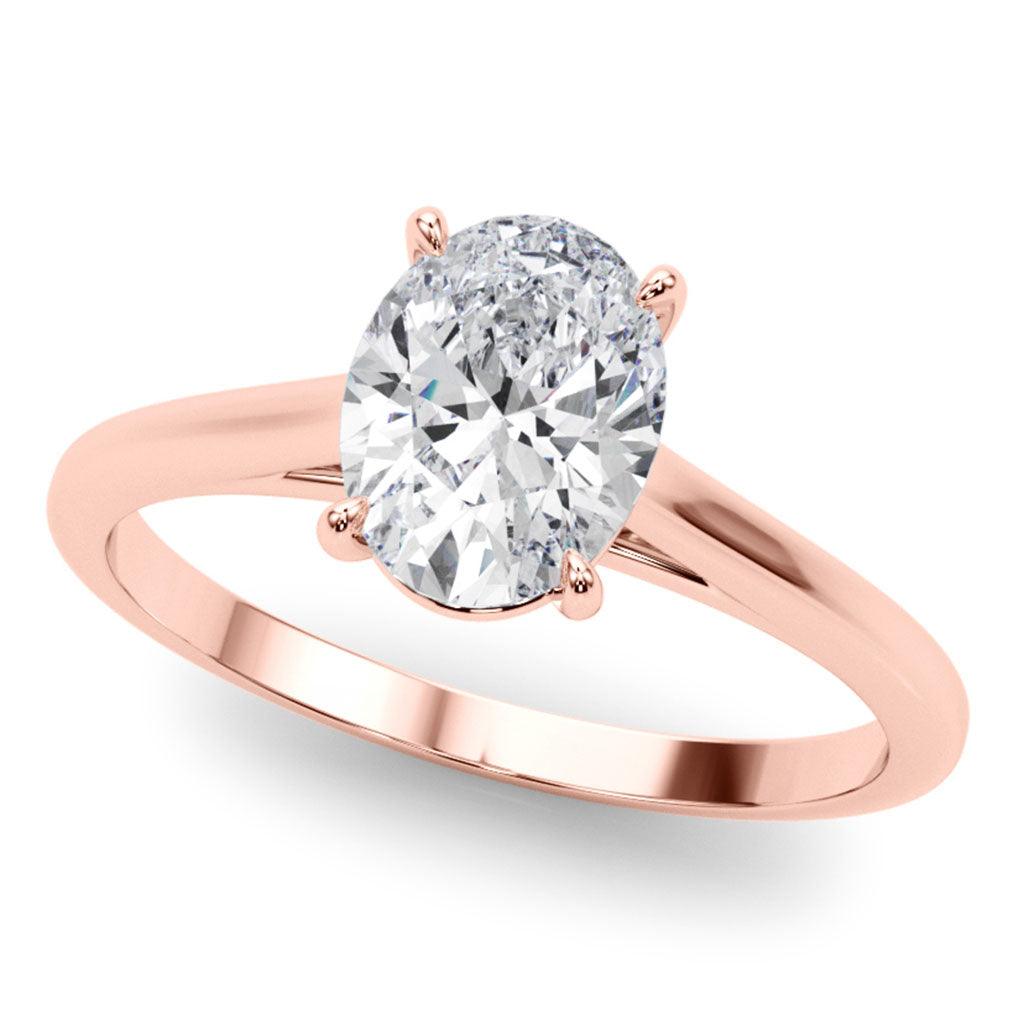
The arch under the stone is the whole point
A cathedral setting carries the shoulders of the band up into the claws in one continuous sweep, the way a buttress carries a wall. On Amber that arch does two things at once. It lifts the oval high enough to clear a wedding band, and it braces the head from both sides so the centre stone is held by the structure of the ring rather than by four thin prongs on their own. You notice it from the side. From above it still reads as a clean solitaire.
This is the setting only. You choose the centre diamond yourself from our live inventory, natural or lab grown, GIA or IGI certified, and we set it for you. The half-round band is a true comfort profile, rounded on the inside, and it sits flat against a plain wedding band without a gap.
Available in 14ct or 18ct white, yellow or rose gold, or 950 platinum. 14ct is harder and takes daily wear slightly better. 18ct holds richer colour and is what most of our customers choose. Platinum is heavier on the hand and white the whole way through, so it never needs re-plating.
Every Monroe Yorke ring goes through ten distinct stages over four to eight weeks. Design refinement. Three-dimensional modelling. Casting. Stone sourcing. Cleaning. Polishing. Setting. About eight hours of bench-level finishing. Quality control. And the final approval our master jeweller signs off himself. Made in Australia, ten stages, no shortcuts.
Who should choose a cathedral over a plain four claw
If she works with her hands, or wears the ring every day without taking it off, the cathedral is the safer build. The arch takes the knocks that would otherwise land on the claws. The trade-off is that the stone sits a little higher, which some people love and some don't. Try both before you decide, and if you want the lower, plainer version, Angel is it.
The same design with a lab grown centre diamond already set is on the Amber lab grown page.